Why Your Website Isn't Getting You Clients (and How to Fix It)
You have a website, but the phone isn't ringing. Here are 6 common reasons your site isn't turning visitors into clients.
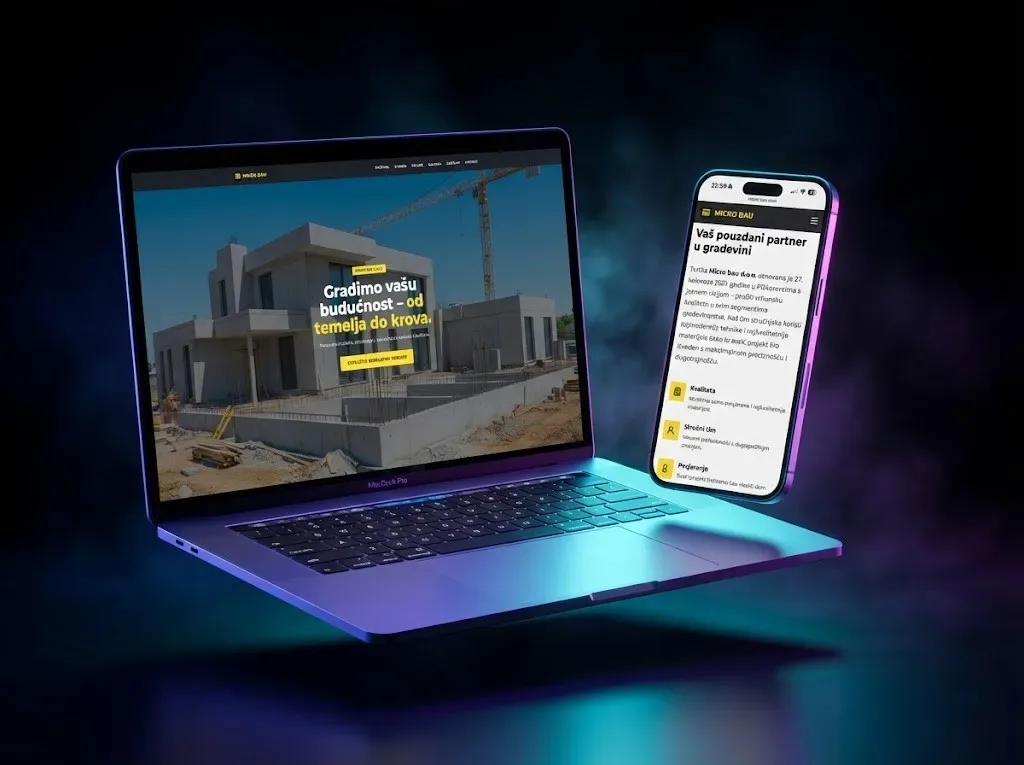
You paid for a website. It looks decent. But weeks, maybe months have gone by and the phone still isn't ringing. No inquiries. The site is there, it just isn't doing its job.
You're not alone. A lot of small business owners in Denmark run into the same thing. The good news is that the problem is almost never that "websites don't work." It's how yours was built.
Here are 6 reasons a website fails to bring in clients, and what to do about each one.
1. No clear call to action
A visitor lands on your page, reads what you do, and then has no idea what to do next.
If there's no clear, visible call to action (CTA), you're losing people who were already interested. A "Contact us" link buried at the bottom of the page doesn't count.
How to fix it:
- Put a CTA button near the top of the page, where people can see it without scrolling
- Write specific button text. "Request a free consultation" or "Send an inquiry" beats a plain "Contact"
- Repeat the CTA further down the page, not just once at the top
- Keep the contact form short: name, email, message, done
Every page should give the visitor an obvious next step.
2. The site loads too slowly
If your site takes more than 3 seconds to load, you're losing over half the people who try to open it. I'm not exaggerating. Google's data shows 53% of mobile users abandon a site that takes longer than 3 seconds.
And slow sites are everywhere. Usually it's a template stuffed with code nobody needs, a homepage carrying 5MB images that were never resized, or the cheapest hosting plan on the market.
How to fix it:
- Test your site at pagespeed.web.dev
- Compress your images. WebP is the format to use
- Look at your hosting. If you're paying 15 DKK/month for shared hosting, the speed will reflect that
- Get it optimized properly if your PageSpeed score sits below 70
Every site we build at Opus Studio is optimized for speed from day one.
3. The site isn't mobile-friendly
More than 60% of your traffic comes from phones. If your site on mobile is just a shrunk-down version of the desktop, with text too small to read, buttons too small to tap, and sideways scrolling, people are gone in a second.
Responsive design isn't a bonus feature. It's the starting point.
How to check:
- Open your site on your own phone and go through every page
- Can you read the text without pinching to zoom?
- Can you tap the buttons and links without missing?
- Does the page settle quickly, or do bits of it jump around while it loads?
How to fix it:
If the site isn't responsive, patching it element by element often costs more than starting over. It's usually worth looking at a new website built for mobile from the start.
4. Google can't find you
You might have the best-looking site in town, but if Google doesn't show it, the only people who ever see it are the ones you hand the link to.
Most small business owners never think about SEO (search engine optimization) at all. So when someone in their city searches for the exact service they offer, they land on a competitor instead.
The SEO basics every site needs:
- A page title (title tag) that says what you do and where: "Plumber Aarhus," not "Welcome to our website"
- A meta description that tells the visitor what to expect
- Headings (H1, H2) written with the words your clients actually type into Google
- A Google Business profile linked to your site
- A fast site running on HTTPS
Even the basics make a real difference for local services. There's more on how we handle this on our services page.
5. The content talks about you, not the client
This one comes up constantly. You open a site and read: "We are a company founded in 2005. We have 20 years of experience. Our team is dedicated to quality."
That's fine, but the visitor doesn't care about your history. They came with one question: can you solve my problem?
How to fix it:
- Lead with the client's problem, not your founding date
- Swap "We offer plumbing services" for something like "Pipe burst at 2am? We're there within the hour."
- Use the words your clients use, not your industry's jargon
- Back it up with something concrete: "Over 200 satisfied clients in Aarhus"
- Put your reviews and references somewhere people will actually see them
Sell the result, not the service.
6. There's no trust on the page
Someone reaches your site. They get what you do. But they have no idea who you are. No photos, no names, no reviews, nothing to show you're a real business that does good work.
Online, trust comes from a handful of things most sites skip:
- Photos of you and your team, not stock photos
- Google reviews or client testimonials
- A portfolio or work gallery with real examples
- Contact details that are easy to find: phone, email, address
- An SSL certificate, the padlock in the browser bar
- Links to your social profiles, if you keep them active
People buy from people they trust, and your site has about 10 seconds to earn it.
See how we build trust for our clients in the portfolio.
Quick test: is your website working for you?
Answer these:
- Can a visitor tell what you offer within 5 seconds?
- Is there a clear CTA button near the top of the page?
- Does the site load in under 3 seconds?
- Does it look good on a phone?
- Do you show up on Google for your service plus your city?
- Are there at least 3 reviews or references visible on the site?
If you said "no" to 3 or more, your website is costing you clients right now.
Conclusion
A website that doesn't bring in clients isn't wasted money, as long as it's built around a clear goal, a clean structure, and solid optimization. Done right, it's the cheapest marketing you'll ever run.
The problem is almost always the execution, not the idea. And more often than not, the fix is simpler than you'd expect.
Want us to review your site and tell you exactly what to fix? Get in touch for a free consultation. Check out our projects or learn more about our services.